Most people who walk in to sell gold have never done it before. They inherited a piece, found something at the back of a drawer, or decided to finally do something with jewelry they stopped wearing years ago. And they show up not knowing what to expect — whether they’ll feel pressured, whether they’ll understand the offer, whether the whole thing is somehow a trap.
It isn’t. The process is straightforward, takes about fifteen minutes, and you can walk out with your items if the offer doesn’t work for you. Here’s exactly what happens, step by step.
Step 1: Walking In
No appointment needed. Walk-ins are how almost all gold sales work — people come in when it’s convenient for them, not when a calendar slot opens up.
Bring whatever you have. Don’t sort it or organize it first. Don’t try to figure out which pieces are real and which aren’t — bring everything, even the pieces you suspect are costume jewelry or gold-filled. We’ll sort through it with you, and knowing the difference between your pieces is part of what we do.
The only thing you do need to bring: a valid, government-issued photo ID. More on why in a moment.
Know exactly what your jewelry and estate pieces are worth before visiting any buyer. Sort your items at home using a JSP 10K–22K Gold & Silver Acid Testing Kit, inspect worn stamps with a 10x Hastings Triplet Jeweler's Loupe, and weigh in true grams and troy ounces on a 0.01g Digital Jeweler Scale.
Step 2: Visual Inspection and Sorting
The first thing that happens is a quick visual examination of each piece. We’re looking for hallmarks — the small stamps inside ring bands, on clasps, and near settings that indicate karat weight. Common stamps include 10K, 14K, 18K, 585, 750, and 417.
We’re also identifying what’s not gold. Pieces stamped GF (gold filled), GP or GE (gold plated or electroplated), or HGE (heavy gold electroplate) contain gold but not solid gold — they’re separated out and evaluated differently. Pieces with no stamp at all get tested rather than assumed either way.
This initial sort takes two or three minutes. At the end of it, you’ll have a rough sense of which of your pieces are candidates for solid gold and which aren’t.
Step 3: Magnet Test
A quick pass with a strong magnet eliminates the obvious non-gold pieces — anything with an iron or steel core will pull toward it noticeably. Real gold, and the alloy metals typically mixed with it, are not magnetic.
This takes about thirty seconds. It won’t confirm gold, but it will catch steel-backed fakes before we get to the more precise testing.
Step 4: Professional Testing
For pieces that passed the visual and magnet steps, we move to professional testing. Most gold buyers use one or both of two methods:
Acid testing — A small drop of nitric acid applied to the metal (or to a streak rubbed on a testing stone) produces a reaction that varies depending on gold purity. Different acid concentrations correspond to different karats. This is quick and gives a reliable surface reading.
XRF (X-ray fluorescence) — A handheld analyzer that fires X-rays at the piece and reads the energy signature of the elements present. It tells you the exact alloy composition — not just that something is gold, but what karat it is and what metals are mixed into it. XRF is non-destructive, takes about ten seconds per piece, and is the standard used by serious buyers. It can also detect plating, where the surface gold doesn’t match the interior.
We’ll tell you what the test shows. If a piece comes back as 14K, you’ll know it’s 14K.
Step 5: Weighing
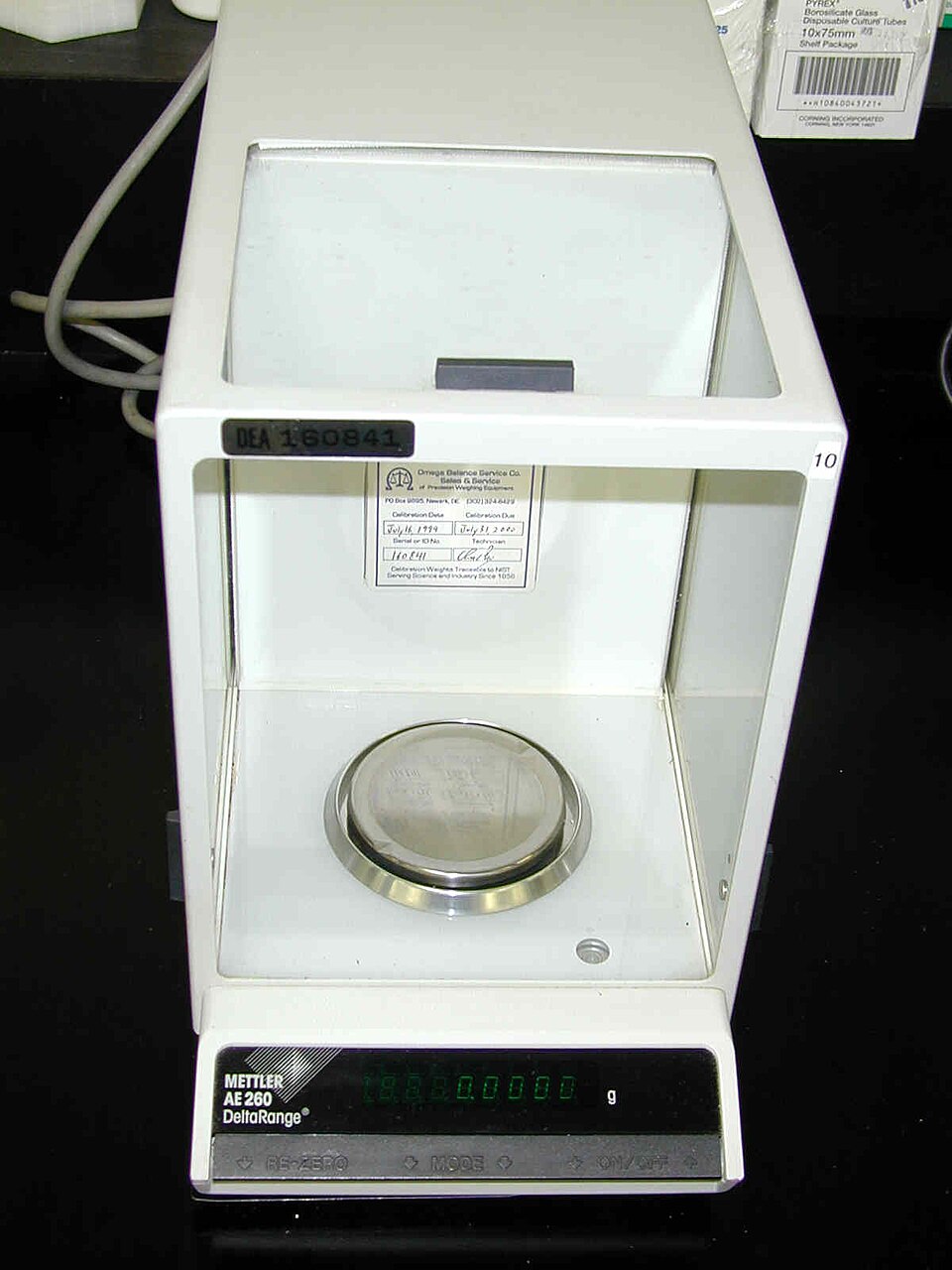
Once karat is confirmed, each piece is weighed on a calibrated scale — in front of you. The weight is measured in grams and then converted to troy ounces, the unit used for all precious metal pricing globally. A troy ounce is 31.1 grams.
If you have mixed-karat pieces — some 10K, some 14K — they’re weighed separately, because each karat has a different percentage of actual gold content.
Step 6: The Math
This is where the offer is calculated, and a legitimate buyer should show it to you on paper or a screen, not just announce a number.
The formula is straightforward:
Weight (troy oz) x Purity (%) x Spot Price x Buyer Percentage = Offer
Walk through each piece:
- A 14K piece is 58.5% pure gold. If it weighs 5 grams (0.161 troy oz), you multiply that weight by 0.585 to get the actual gold content — about 0.094 troy oz of pure gold.
- That’s multiplied by the current spot price, which you can check on our live gold prices page to see what the market looks like before you come in.
- That gives you the theoretical melt value — what the pure gold content would be worth if it were a bar on an exchange.
- The offer is a percentage of that melt value. Dedicated gold buyers typically offer a strong, transparent percentage of live melt value based on karat purity and lot size—while bullion coins and bars command up to 90%–96%+ of spot. Pawn shops generally offer 20 to 35 percent.
The buyer’s percentage accounts for refining costs, testing, overhead, and margin. Any honest buyer will explain where that number comes from.
Step 7: The Offer — No Pressure
Once the math is done, you’ll get an offer. You can take it or decline it. If you decline, your items are handed back to you, no charge, no hard feelings. Nobody should be pressuring you to sell in the moment — a good buyer knows that a fair offer doesn’t need pressure behind it.
The offer is based on the market price at the time you’re there, so if you leave and come back a week later, the number may be slightly different depending on where gold is trading. But the process will be exactly the same.
Step 8: Payment
If you accept the offer: payment is made in cash, same day. No waiting for a check to clear, no ACH transfer, no gift card. Cash, in your hand, before you leave.
Tennessee state law requires gold buyers to record the seller’s identity and keep transaction records. That’s why the ID is required — it’s not a personal decision by any particular buyer, it’s a state regulation that applies to any dealer buying secondhand precious metals. Your information is kept on file but is not shared.
What Not to Do Before You Come In
A few things that people do with good intentions but that don’t help — and occasionally hurt:
Don’t clean your jewelry before selling. Cleaning doesn’t add value and can, in rare cases, damage older or more delicate pieces. The buyer will evaluate the metal, not its shine.
Don’t separate your pieces expecting to sort the “real” from the “fake” yourself. Bring everything. You might be surprised what tests as gold, and you might be right to leave some pieces out — but let the testing decide.
Don’t reference your insurance appraisal as an expected price. Insurance appraisals value jewelry for replacement cost at retail — which includes design, craftsmanship, brand, gemstone setting, and retail markup. Melt value is just the metal. A piece appraised at a thousand dollars for insurance purposes might have a metal melt value of a small fraction of that. The appraisal isn’t wrong — it’s just measuring something different than what a buyer pays for.
“What If the Offer Seems Low?”
This is the most common concern people have walking out the door. The gap between what gold jewelry looks like it should be worth and what a buyer offers for it is usually explained by one thing: the difference between retail value and melt value.
When a piece was made, someone designed it, cast or hand-fabricated it, set stones, polished it, and sold it through a retailer with their margin on top. All of that added cost is built into the retail price. When you sell the metal, none of that is recoverable — the buyer is buying the raw gold content, which will be melted down and refined.
A piece with significant design value, a maker’s mark, or intact gemstones worth preserving might warrant a higher offer — and a good buyer should tell you if that’s the case. But for most everyday jewelry, the melt value is the basis.
If you feel the offer is too low, you can take your items to another buyer. You should. Getting two or three quotes is a reasonable thing to do, and any legitimate buyer will tell you that.
Ready to Know What You Have?
If you’re in Knoxville and want to know what your gold is worth, visit our sell gold Knoxville page or go straight to easttennesseegoldbuyers.com/#quote to get the conversation started. No appointment, no commitment — just a straight answer on what your pieces are worth today.
Quick Overview: The 8-Step Knoxville Appraisal Protocol
| Step | Procedure | What You See at the Counter |
|---|---|---|
| 1–2. Sorting & Hallmarks | 10x optical inspection of karat marks | Items grouped into 10K (417), 14K (585), 18K (750), 22K, 925, and unmarked |
| 3–4. Magnet & Purity Testing | Rare-earth magnet + Acid / Electronic / XRF test | Unmarked pieces verified; gold-filled and plated brass separated |
| 5–6. Weighing & Live Math | Calibrated gram scale + Live XAU/XAG spot feed | Exact gram weight converted to troy ounces (31.1035g = 1 ozt) |
| 7–8. Offer & Cash Payout | Zero-obligation offer & ID record | Immediate same-day cash in hand (or take your items back at zero cost) |