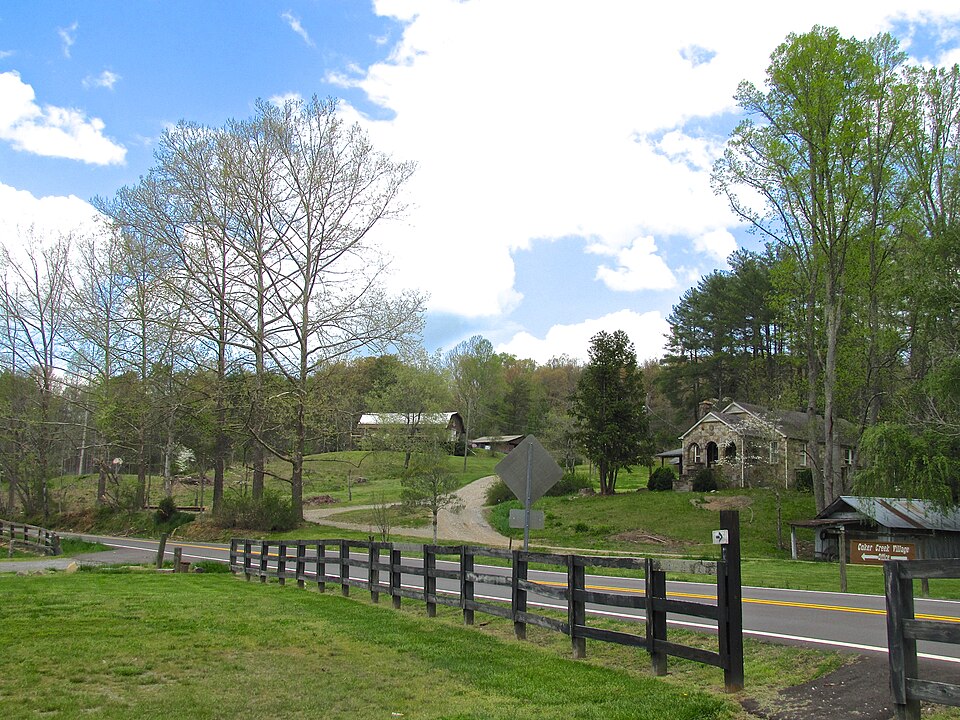
Ask most Americans when the first gold rush in the United States took place, and they will point to Sutter's Mill in California in 1849. Yet residents of East Tennessee live less than sixty miles north of one of America's earliest documented gold rushes: the 1827–1831 Coker Creek Gold Rush in Monroe County, Tennessee, situated along the western flanks of the Unicoi Mountains.
The 1827 Discovery Along Coker Creek
Geological and historical records show that alluvial placer gold was first discovered by settlers along Coker Creek (originally Coqua Creek) in southern Monroe County around 1827, after settlers learned of yellow metal nuggets in the mountain stream beds from local Cherokee inhabitants. At the time of the 1827 discovery, the Coker Creek valley south of the Hiwassee River remained inside the sovereign boundaries of the Cherokee Nation.
Word of rich placer gravel spread rapidly along the Unicoi Turnpike. Within three years, between 600 and 700 prospectors had poured into the narrow mountain hollows around Coker Creek, Whippoorwill Branch, and Sixmile Creek, triggering federal military intervention to police unauthorized mining encampments and accelerating the political pressures that culminated in the 1835 Treaty of New Echota and the 1838 Trail of Tears.
Know exactly what your jewelry and estate pieces are worth before visiting any buyer. Sort your items at home using a JSP 10K–22K Gold & Silver Acid Testing Kit, inspect worn stamps with a 10x Hastings Triplet Jeweler's Loupe, and weigh in true grams and troy ounces on a 0.01g Digital Jeweler Scale.
Dr. Gerard Troost's Historic 1831 Geological Inspection
In 1831, the Tennessee General Assembly appointed Dr. Gerard Troost—a Dutch-born physician, mineralogist, and founding president of the Academy of Natural Sciences in Philadelphia—as Tennessee's first State Geologist. Troost traveled personally into the Unicoi Mountains to inspect the Coker Creek diggings and delivered his landmark report to the Tennessee legislature on October 18, 1831.
Troost documented hundreds of miners washing stream gravels in sluice boxes and rockers along the contact zones of the Ocoee Supergroup—precambrian metamorphosed siltstones, slates, and graywackes cut by gold-bearing hydrothermal quartz veins. Following the state land lottery of the Ocoee District in 1838, systematic placer and hydraulic mining continued at Coker Creek through the 1850s (peaking between 1856 and 1860, with single nuggets reported up to one pound in weight) and intermittently into the twentieth century.
How Coker Creek and Ducktown Metals Moved Through Knoxville
While Monroe County and neighboring Polk County (home to the 1843 Ducktown Copper Basin, which produced most of Tennessee's twentieth-century gold and silver as smelting byproducts) supplied the raw ore, Knoxville served as the regional commercial, railroad, and banking hub where merchants, supply outfitters, and Gay Street banks cleared the wealth of the Southern Appalachian mineral belt.
Today, visitors can still pan for recreational alluvial gold by hand in Coker Creek (read our Coker Creek Gold Panning Guide for Cherokee National Forest rules and recommended Garrett panning kits).