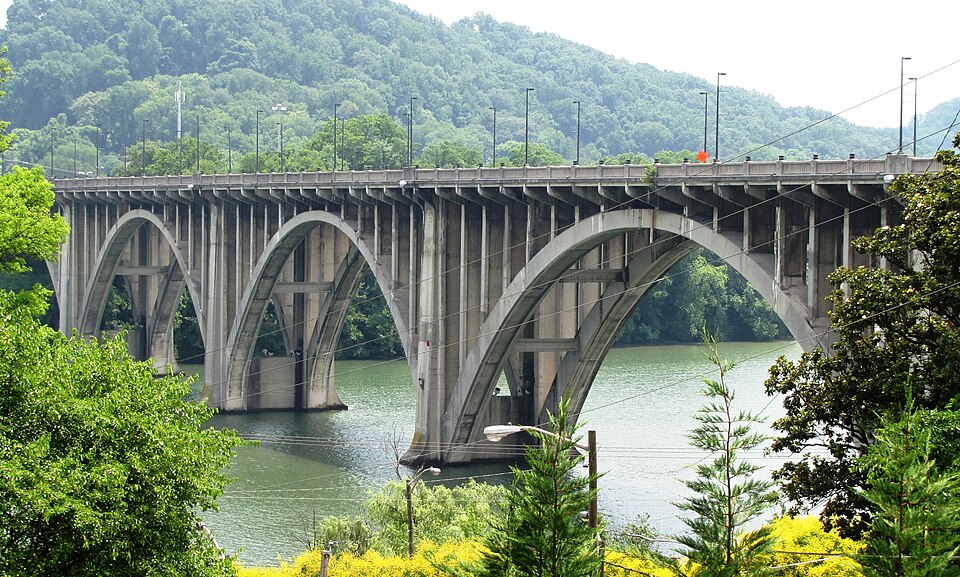
Stand on the Gay Street Bridge and look west down the Tennessee River. The water you’re watching drains an enormous area — the highlands of southwestern Virginia, the ridges and coves of western North Carolina, the mountains of East Tennessee and North Georgia. Somewhere upstream, in the ancient metamorphic rock of those mountains, gold formed under conditions of heat and pressure that existed hundreds of millions of years ago. Some fraction of that gold, eroded and carried downstream over geological time, is in that water right now. Not much. But some.
The question gold prospectors have always asked about East Tennessee’s rivers is whether “some” is enough.
The Geology of a Gold-Bearing Watershed
The Tennessee River at Knoxville is the product of two primary tributaries: the French Broad, which drains southwestern North Carolina and the mountains of Haywood and Madison Counties before entering Tennessee, and the Holston, which drains the Ridge and Valley country of northeastern Tennessee and southwestern Virginia.
Of these, the French Broad is the more geologically interesting for gold purposes. Its headwaters originate in the Blue Ridge province of North Carolina — the same geological formation that contains the gold-bearing rock of the southern Appalachians. The French Broad drainage basin includes portions of western North Carolina where documented gold production occurred. Any gold in those formations that erodes into streams eventually works its way downstream into the French Broad and then into the Tennessee.
The Holston drains primarily Valley and Ridge territory — limestone and sandstone, not gold-bearing metamorphic rock — so it contributes little to the system’s gold content.
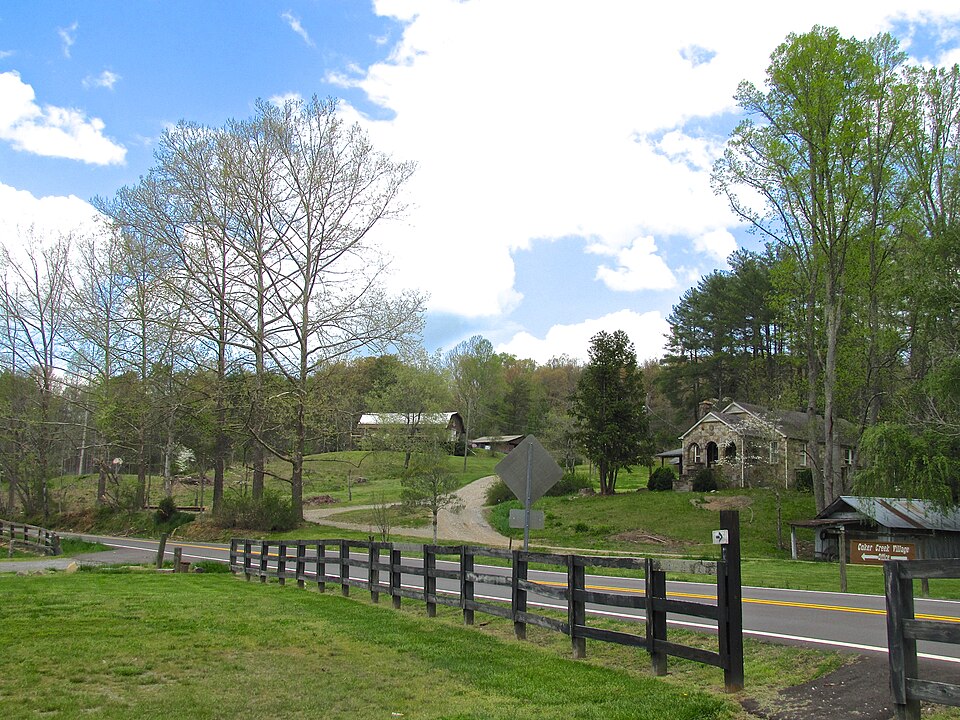
The Little Tennessee River, which enters the Tennessee River system south of Knoxville, drains the Nantahala and Unicoi Mountains of North Carolina and Monroe County, Tennessee. This drainage includes the Coker Creek area, which produced approximately 9,000 troy ounces of documented placer gold during its active mining period in the 19th century. Before the completion of Tellico Dam in 1979, which created Tellico Lake and flooded parts of the lower Little Tennessee valley, this river was the most gold-productive drainage in the region accessible to recreational prospectors.
Know exactly what your jewelry and estate pieces are worth before visiting any buyer. Sort your items at home using a JSP 10K–22K Gold & Silver Acid Testing Kit, inspect worn stamps with a 10x Hastings Triplet Jeweler's Loupe, and weigh in true grams and troy ounces on a 0.01g Digital Jeweler Scale.
What Prospectors Have Found
The record of gold panning in the Tennessee River itself at Knoxville is sparse. The river at this point is large, its current-deposited gold is diluted by an enormous volume of sediment from non-gold-bearing tributaries, and any placer concentration that formed historically has been disturbed by dredging, industrial use, and TVA operations.
The more productive ground for recreational prospectors in the Knoxville area has historically been in the upper tributaries — streams that drain more directly into gold-bearing rock before the gold is diluted. Certain creek systems in Blount County, in the hills between Knox and Blount Counties, and in the headwaters of rivers flowing from the Blue Ridge have produced “color” — the small flakes and occasional small nuggets that recreational panning recovers.
The Tennessee State Geological Survey maintains records of mineral occurrences throughout the state. Native gold is recorded at Montvale Springs in Blount County, in the stream gravels of the southern Blount and Monroe County corridor, and at various points in the broader southern Appalachian drainage system. The USGS mineral occurrence data for Tennessee confirms that while Knox County proper is not gold country, the drainage systems feeding into it originate in areas where gold has been documented.
The Recreational Prospecting Picture Today
Gold panning in Tennessee’s streams is legal on most public land and on streams where no specific mining claims exist. Coker Creek in Monroe County remains the most well-known prospecting destination in East Tennessee — it is on the National Forest land of the Cherokee National Forest, and recreational panning there regularly produces results for patient prospectors. Small flakes are common; anything larger is a notable find.
The Knoxville area tributaries — particularly those draining the eastern ridges of Knox County into Blount County — are less consistently productive but have been worked by recreational prospectors for generations. The results are honest: small flakes of placer gold, occasional pieces that might technically be called nuggets if you’re generous with the definition. Not fortune-making, but real gold.
The Gold That’s Already Been Found
There is a different kind of gold in Knox County that doesn’t require panning at all: the accumulated precious metal of a century and a half of estate inheritance, jewelry given as gifts, coins saved against uncertain times, sterling silver sets from mid-century households.
The gold that moved through this city — through its banks, its jewelry stores, its estates — is still here. It’s in drawers and jewelry boxes and safe deposit boxes across Knox County. When those households turn over, that gold enters the market.
If you have gold, silver, or coins to sell in Knoxville, see our Sell Gold in Knoxville page or request a free quote from East Tennessee Gold Buyers. We show you the current spot price, the weight of your metal, and the full calculation — nothing hidden.
East Tennessee Watersheds: Geology & Placer Gold Potential
| River / Tributary System | Headwaters Geology | Documented Placer Gold? | Recreational Prospecting Notes |
|---|---|---|---|
| Coker Creek / Tellico River (Monroe Co.) | Unicoi Mtns (Ocoee Supergroup quartz veins) | Yes — Historic Gold District | Best hand-panning in East TN (Cherokee National Forest rules apply) |
| Little Tennessee River | Blue Ridge / Nantahala / Unicoi Mountains | Yes (Historic alluvial bars) | Lower valley impounded by Tellico Dam (1979) and Calderwood Dam (1930) |
| French Broad River | Western NC Blue Ridge Metamorphic Belt | Trace fine flour gold | Heavily diluted by the time it reaches Knox County |
| Little River (Blount County) | Northern Great Smoky Mountains | Minor trace occurrences | No panning allowed inside Great Smoky Mountains National Park |
| Holston River | Valley & Ridge Sedimentary Carbonate | Negligible | Limestone/dolomite bedrock lacks hydrothermal gold veins |