More than two thousand years ago in Syracuse, the Greek mathematician Archimedes discovered that he could determine whether a royal crown was solid gold or alloyed with cheaper silver by measuring the volume of water the crown displaced relative to its dry weight. Today, that exact physical principle—Specific Gravity (Relative Density)—remains one of the best non-destructive tests you can perform at home in Knoxville using a 0.01g digital jeweler scale.
Because pure gold is one of the densest elements on Earth (19.32 grams per cubic centimeter), nearly every base metal used to fake gold (such as brass at 8.5 g/cm³, copper at 8.96 g/cm³, or silver at 10.49 g/cm³) is roughly half as dense as pure gold.
Step-by-Step Home Specific Gravity Test Procedure
Note: This test works only on solid metal items without hollow cores or large gemstones (such as solid wedding bands, bullion coins, cast bars, or solid signet rings). Hollow rope chains or hollow hoop earrings trap air inside and will give artificially low density readings.
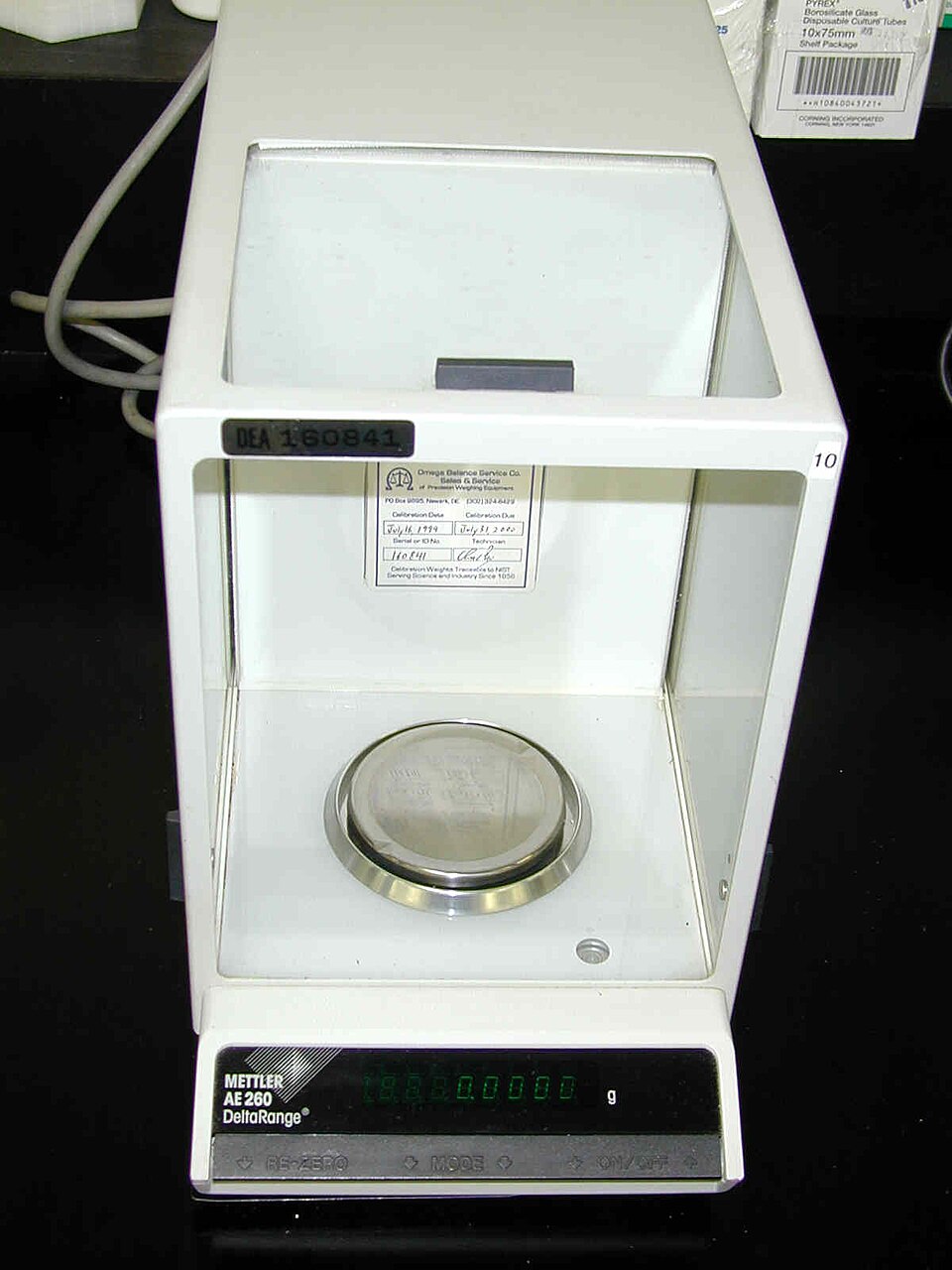
- Record the Dry Weight ($W_{ ext{dry}}$): Place your calibrated 0.01g digital gram scale on a level table, tare it to
0.00 g, weigh your dry gold ring or coin, and write down the exact weight in grams (for example,15.40 g). - Tare a Cup of Distilled Water: Place a small plastic cup filled two-thirds with room-temperature water on the scale platform and press the TARE / ZERO button so the display reads
0.00 gwith the cup of water sitting on it. - Suspend the Item Fully Submerged ($W_{ ext{wet}}$): Tie a single strand of ultra-thin sewing thread or dental floss around the ring or coin. Lower the item into the water until it is completely submerged below the surface without touching the bottom or sides of the cup. Shake off any clinging air bubbles. Read the weight displayed on the scale (for example,
1.00 g). Because water has a density of1.00 g/cm³, this submerged weight reading equals the exact volume of water displaced! - Divide Dry Weight by Submerged Weight: Divide your dry weight by the submerged water-displacement weight:
Specific Gravity = Dry Weight ÷ Submerged Weight. In our example,15.40 g ÷ 1.00 g = 15.40, which matches 18K Yellow Gold.
Know exactly what your jewelry and estate pieces are worth before visiting any buyer. Sort your items at home using a JSP 10K–22K Gold & Silver Acid Testing Kit, inspect worn stamps with a 10x Hastings Triplet Jeweler's Loupe, and weigh in true grams and troy ounces on a 0.01g Digital Jeweler Scale.
Standard Specific Gravity Reference Table for Precious Metals
| Metal / Karat Alloy | Pure Gold / Metal Fineness | Specific Gravity Range (g/cm³) |
|---|---|---|
| Brass / Bronze / Copper (Counterfeit) | 0% Gold | 8.40 – 8.96 |
| Sterling Silver (.925) / 999 Fine Silver | 92.5% – 99.9% Silver | 10.36 – 10.49 |
| 10K Yellow Gold | 41.7% Gold (.417) | 11.40 – 11.65 |
| 14K Yellow Gold | 58.3% Gold (.583/.585) | 12.90 – 13.45 |
| 18K Yellow Gold | 75.0% Gold (.750) | 15.20 – 15.65 |
| 90% Pre-1933 U.S. Gold Coin | 90.0% Gold (.900) | 17.16 – 17.30 |
| 22K Gold (American Eagle / Krugerrand) | 91.67% Gold (.9167) | 17.45 – 17.80 |
| 24K Pure Gold Bullion (.9999) | 99.99% Gold | 19.30 – 19.32 |
| 950 Platinum (PT950) | 95.0% Platinum | 20.50 – 21.45 |
The Tungsten Exception: Why You Still Need Acid or Electronic Verification
There is one non-precious metal on the periodic table that shares almost the exact same specific gravity as pure 24K gold: Tungsten (19.25 g/cm³). Sophisticated counterfeit 1 oz gold bars are sometimes manufactured by drilling out a gold bar or electroplating a heavy tungsten slug with a thick layer of 24K gold. While a tungsten-cored bar will pass a specific gravity test, it is immediately caught by an electromagnetic resistivity verifier (Sigma Metalytics) or by deep testing. Check our Recommended Gold Testing Kits & Scales to compare home scales, acid kits, and electronic testers.