People sometimes ask whether there’s gold in the Knoxville area, expecting either a dramatic yes or a flat no. The honest answer is more interesting than either.
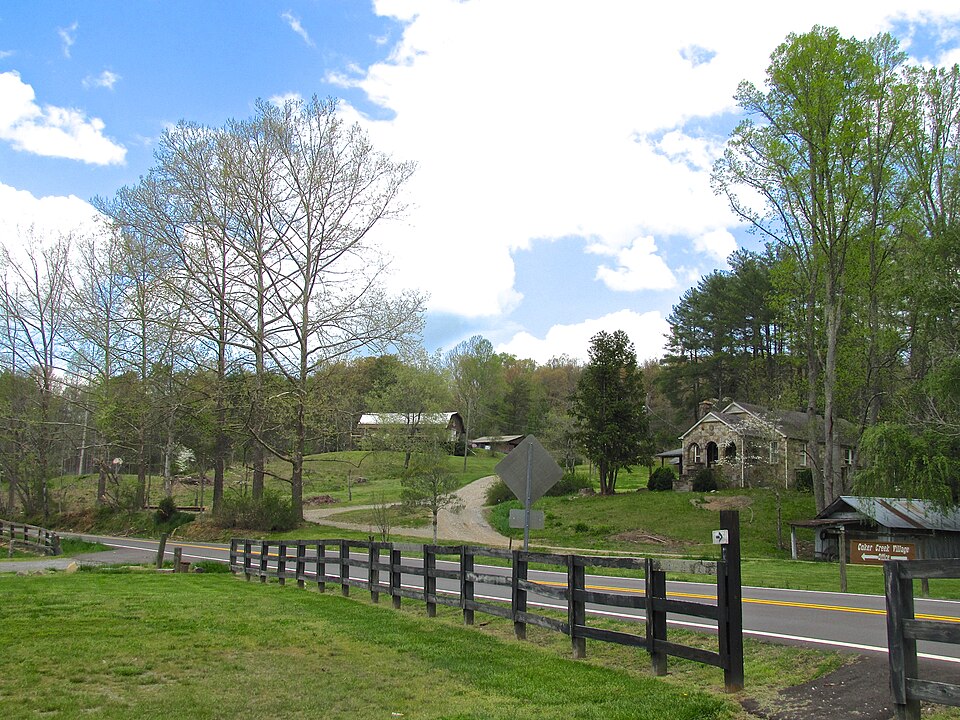
Knox County sits in the Valley and Ridge province — long parallel ridges of folded limestone and sandstone, not the metamorphic rock that hosts gold veins. The primary gold-bearing zones in East Tennessee are south and east of Knoxville, in the mountains of Monroe and Blount Counties where the geology shifts into the older, harder Blue Ridge. Knox County was never a mining district in the way Coker Creek in Monroe County was, with its 600-700 prospectors and documented production of approximately 9,000 troy ounces.
What Knox County has always been instead is a crossroads. And crossroads accumulate gold.
Knoxville as a Regional Center
Knoxville was the first capital of Tennessee, served as a major Civil War objective for both armies, and grew through the 19th and 20th centuries as the commercial and banking center of East Tennessee. Commerce flows through cities. And where commerce flows, gold accumulates — in the form of coins, jewelry, banking reserves, and the ordinary precious metal that families accumulate over generations of prosperity and hardship alike.
The Tennessee River, which flows through downtown Knoxville, drains a watershed that reaches into gold-bearing country to the south and east. Gold from the Coker Creek district and from the broader southern Appalachian mountains would have washed into the Little Tennessee River system and eventually downstream. Small quantities of placer gold have been reported in the broader Tennessee River watershed — not enough to constitute commercial mining, but consistent with a river system that originates in gold country.
Before buying or liquidating coins and bullion in Tennessee, verify exact troy weight and dimensions at home with a 0.01g Digital Troy Ounce Scale, a Bullion Acoustic Ping Tester & Digital Caliper, or a non-destructive Precious Metal Verifier.
What Civil War-Era Knoxville Left Behind
The Civil War produced a specific category of buried and hidden gold that still occasionally surfaces in East Tennessee. Families who feared one army or another confiscating their valuables buried them, hid them, or converted them into portable forms — jewelry and gold coins being the most common. Knox County was occupied by Union forces and fought over during the Siege of Knoxville in November 1863. That kind of upheaval, extended over years, created conditions where gold was moved, hidden, and sometimes not recovered.
The gold coins most commonly encountered in Knox County estates — Liberty Head Double Eagles, Indian Head Eagles, Half Eagles, and earlier Capped Bust and Draped Bust issues — date from the periods when Knoxville families were accumulating and sometimes hiding wealth. Pre-1933 gold coins are still a significant part of what surfaces in Knox County estate collections.
Inherited Gold in Established Knoxville Neighborhoods
The older established neighborhoods of Knox County — Sequoyah Hills, Holston Hills, Fountain City, Bearden — are home to families with multi-generational roots in the region. These neighborhoods have produced a consistent stream of estate jewelry, silver, and gold coins over the decades as households change hands and families downsize.
The pattern is familiar: a family with ties to Knoxville going back to the early 20th century accumulates gold through jewelry purchased across decades, through inheritance from parents and grandparents, through gold coins kept as savings or given as gifts. By the time the household is being sorted — whether during a move, a downsizing, or an estate settlement — the accumulated metal can be significant.
We see this regularly. A shoe box of old jewelry from a house in the Sequoyah Hills area. A coffee can of coins from an attic in Holston Hills. A jewelry box from a Bearden home that contains pieces spanning five decades. Most families have no idea what the combined melt value of these items actually is until they’re weighed and tested.
Knox County Today
Knox County is not gold-mining country, but it is gold-holding country. The estates and households of a region that has been accumulating precious metal since the mid-19th century represent a substantial pool of material. Much of it is still being discovered — in drawers, in estate sales, in attics, in safe deposit boxes that get opened after a death in the family.
If you’re managing an estate or clearing out a household in the Knoxville area, see our Sell Gold in Knoxville page for more information on what we buy. For a free valuation with no commitment required, request a quote from East Tennessee Gold Buyers — the main buyer serving the region.
Most transactions in Knoxville are completed in fifteen to twenty minutes, with cash in hand the same day.
Geological & Historical Comparison: Knox County vs. Blue Ridge Gold Districts
| Region | Geological Province | Bedrock Lithology | Primary Precious Metal Role |
|---|---|---|---|
| Knoxville & Knox County | Valley and Ridge Province | Ordovician Holston Marble, Knox Dolomite, Limestone | Banking, assaying, railroad commerce & estate gold accumulation |
| Coker Creek (Monroe County) | Western Blue Ridge / Unicoi Mtns | Precambrian Ocoee Supergroup metasiltstone & quartz veins | 1827–1831 placer gold rush (~9,000+ ozt documented historic output) |
| Ducktown Basin (Polk County) | Blue Ridge Metamorphic Belt | Massive polymetallic sulfide ore bodies | Primary 20th-century TN gold & silver producer via copper refining |
Read our companion historical deep dives on 19th-Century Banking and Gold Specie on Gay Street and How the 1827 Coker Creek Gold Rush Connected to Knoxville.